Navigating Autism Waitlists
If you suspect your child might need a diagnosis to receive extra support and services, it is important to receive proper therapies ASAP. You will soon find yourself stalled by waiting-lists upon waiting-lists.
Getting through the wait list as quickly as possible is your goal!
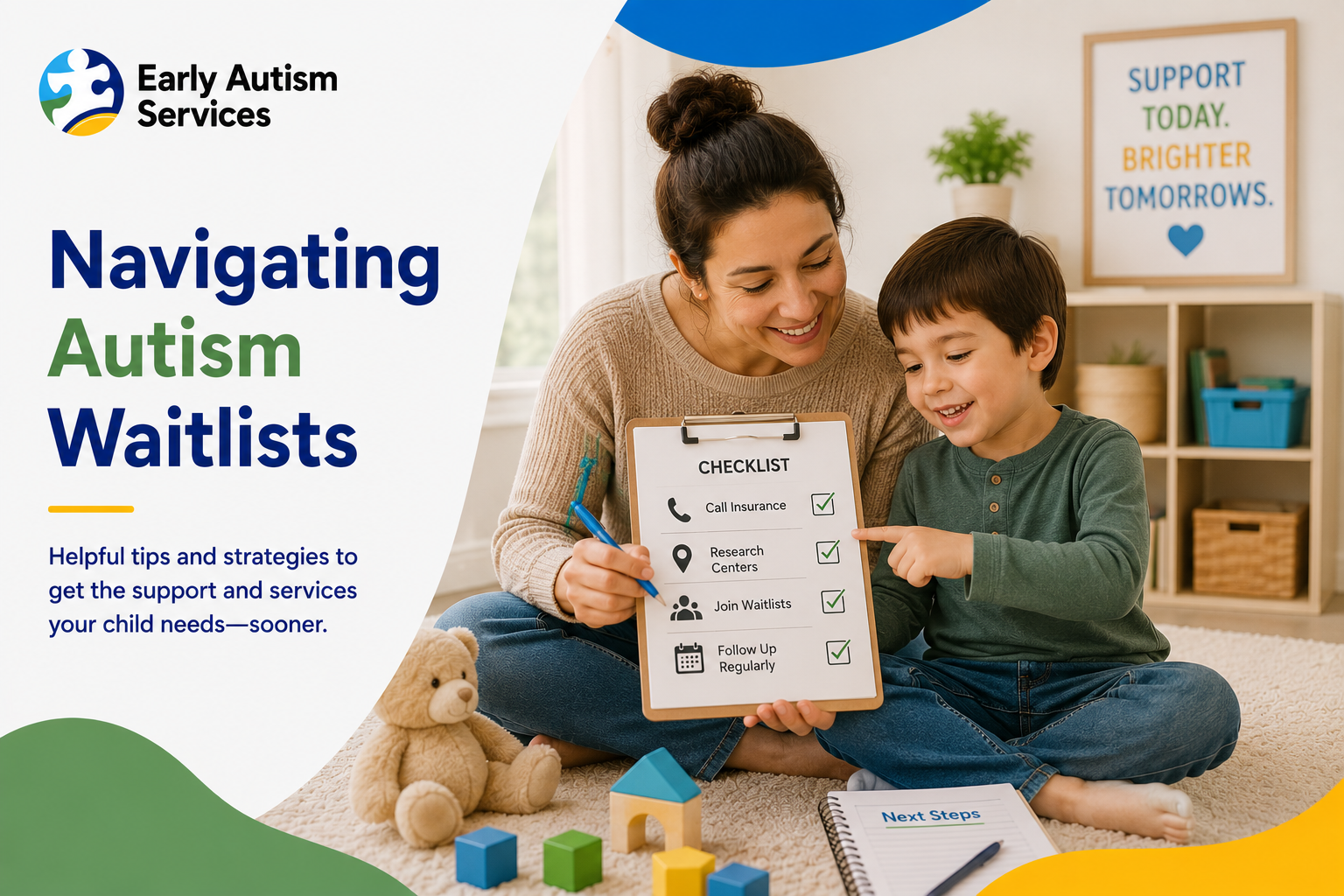
Tips on obtaining a quick diagnosis:
- Call your insurance provider to obtain a list of locations that provide diagnosis.
- Ask your insurance provider to give you diagnostic centers up to an hour away from your home. Provide them with a remote area (less likely to have a wait list).
- Call all of these diagnostic centers and tell them to place you on the waiting list (if they have one).
- Ask how long the wait list is.
- Intermittently call the diagnostic centers to see if they had any cancellations. This increases your chances of obtaining a quicker appointment.
- “The squeaky wheel gets the grease”
Another method on getting through the wait list:
- Research what type of therapies your child will benefit from once they obtain the diagnosis you suspect.
- Call local agencies that provide those services.
- Ask them if they refer any diagnostic centers with a short wait list- mention you are willing to drive up to an hour or two away (if possible).
If you would like to learn more about the aba services for autism we provide, visit our Services Page.
We also encourage families to contact our Intake Specialist today to explore the best therapy options for their child.
Additional Resources
At Early Autism Services, we specialize in both in home aba therapy and center based aba therapy, ensuring families receive the right support without unnecessary delays. Whether you are looking for an autism center near me or aba therapy for kids, our team is here to help.
Explore More
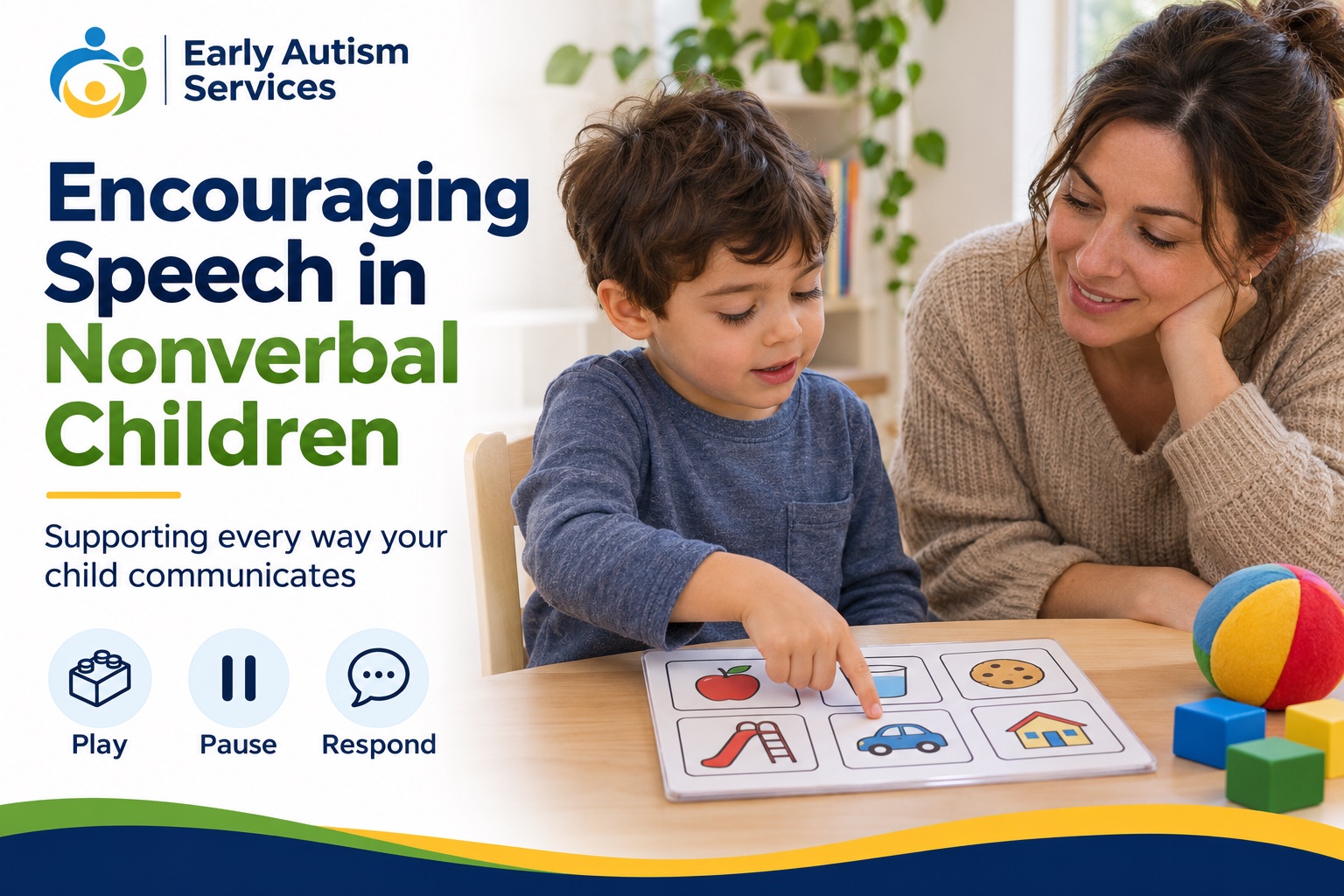
Encouraging Speech in Nonverbal Children
When a child uses few or no spoken words, parents often want to know what they can do to help. Encouraging speech in nonverbal children begins with understanding how the child already communicates and making those messages easier to express and understand.
Some families use “nonverbal,” while others prefer “nonspeaking” or “minimally speaking.” These terms describe speech use; they do not tell us everything about a child's understanding or ideas. The practical goal is reliable communication, with support for speech development when it fits the child's needs.


School Readiness Skills for Children with Autism
School readiness skills help children take part in the routines, relationships, and learning opportunities of the school day. For a child with autism, useful goals might include asking for help, recognizing a familiar routine, or becoming comfortable using a communication system with a new adult.
Readiness is not a pass-or-fail checklist. Children enter school with different abilities and support needs. The American Academy of Pediatrics emphasizes that schools need to be prepared for children at different levels of development, including children with disabilities. [1]
Families can practice useful skills while working with the school to arrange the support their child needs now.


