How to Motivate My Child with Autism
To teach children with autism new skills, it’s essential to identify items, foods, or activities that motivate them. Observe your child during free time to note their preferred activities, then present these items in pairs to determine which they choose most often. Using their preferred items as motivation can significantly enhance their learning process, helping them develop new skills more effectively.

- Children with autism are not typically socially motivated.
- We must then find any physical item, food, or activity that motivates them.
- Finding that item will make it easier to teach your child new skills.
- Avoid thinking that your child will become too dependent on these items. If it helps them learn, then let’s use it to teach new skills.
Two ways to find items your child likes include:
- Watch them during their free time. During free time, put your child in a spot that has all their favorite things. If needed, you can add extra stuff your child likes in the room.
- Write down what they did during their free time.
- Write down how long they did that activity for.
- Watch out for behaviors your child engages in- this can include staring at a fan, hand flapping, rubbing their hands together, looking at the wheels of cars.
- Grab all the items and activities your child enjoys.
- You will present two items at a time as a choice. Ask your child to “pick one.”
- You will then rotate which items you present together.
- Present each item equal amount of times.
- Write down which item your child chooses most often.
- The item your child chooses the most is his/her most preferred item.
Learning new skills can help any kid get through their day-to-day life. With the right support, children can thrive whether through in-home ABA therapy, center-based ABA therapy, or a blend of both, depending on what works best for your family.
If you’d like to explore more about ABA therapy for autism and how it motivates children to learn essential skills, check out our guide on reinforcement and punishment in ABA therapy
Additionally, caregiver training plays a vital role in supporting ABA services for autism, ensuring that strategies extend beyond therapy sessions and into daily life.
At Early Autism Services, we provide personalized autism services designed to meet each child’s unique needs. Whether you’re searching for ABA services at home or looking for an autism center near me, our experienced team can help.
Interested in starting services? Contact our Intake Specialist today and take the first step toward helping your child build new skills with confidence.
Explore More

Behavior Is Communication: Understanding What Your Autistic Child May Be Telling You
Behavior can be an important form of communication, especially when a child cannot easily express their needs in words. This parent-friendly guide explores what an autistic child’s behavior may be communicating, how to recognize possible triggers and patterns, and supportive ways to build functional communication skills.

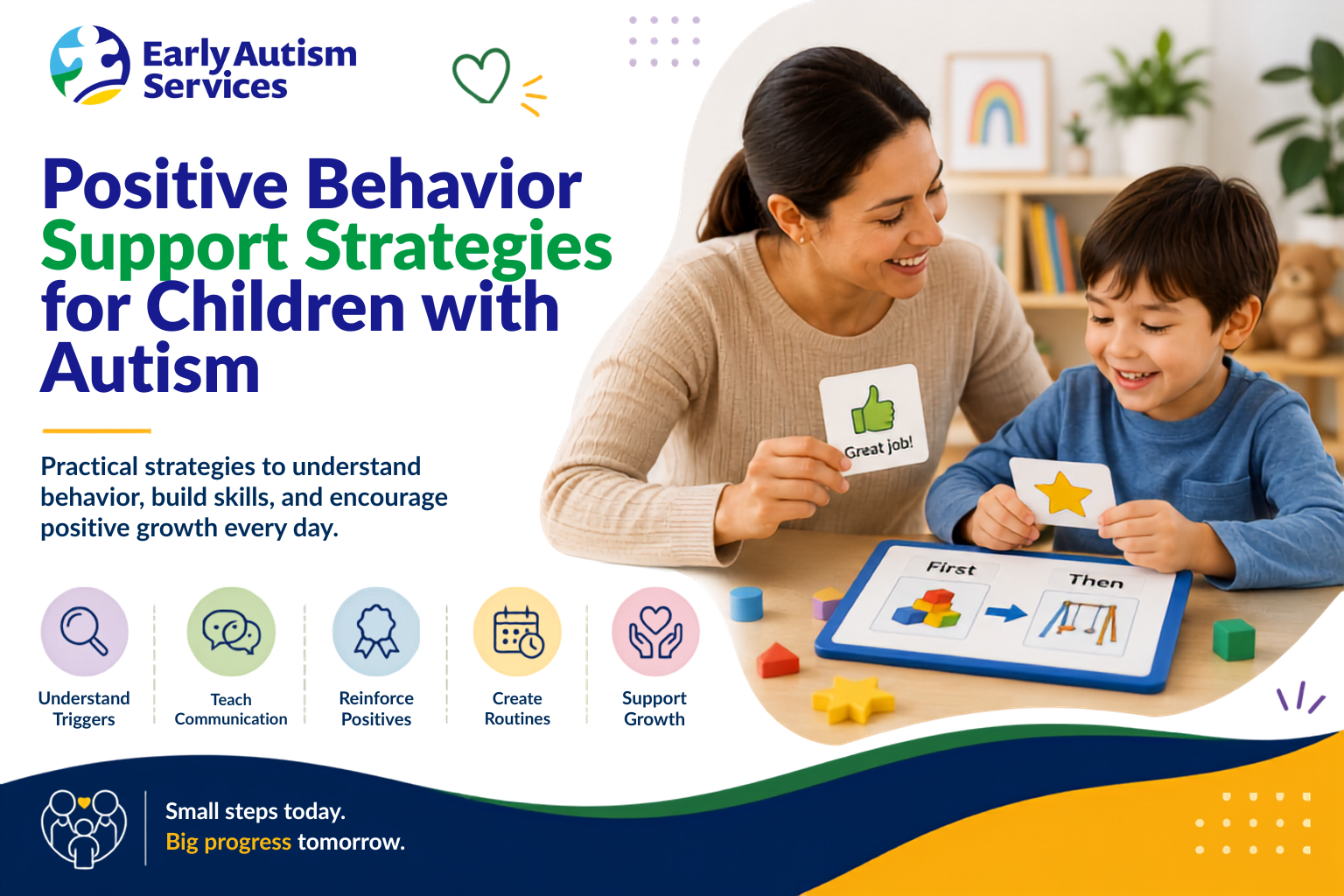
Positive Behavior Support Strategies for Children with Autism
Positive behavior support focuses on understanding why behaviors happen and helping children develop effective ways to communicate their needs. This parent-friendly guide explores practical strategies for identifying triggers, creating predictable routines, reinforcing positive skills, supporting transitions, and encouraging communication at home.
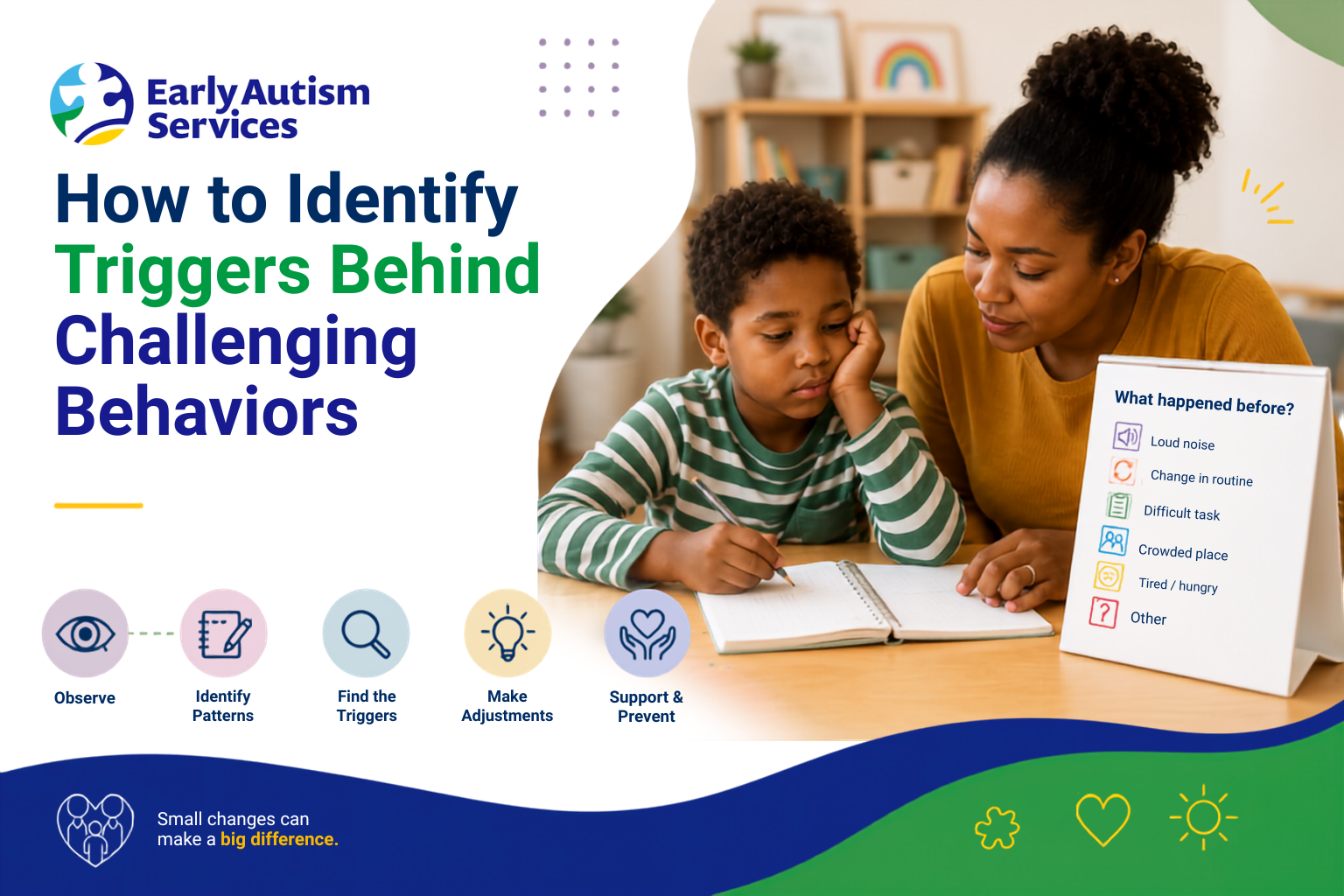
How to Identify Triggers Behind Challenging Behaviors
Challenging behaviors often have a trigger, even when they seem unpredictable. This parent-friendly guide explains how to recognize common autism behavior triggers, use the ABC method to spot patterns, and make supportive adjustments that can reduce stress and help children feel more understood.


