Teaching Your Child to Brush Their Teeth
Ensuring your child’s hygiene is up kept is one of the main tasks in our parenting role. However, important tasks such as toothbrushing can be difficult for many children with autism spectrum disorder. Tooth brushing prevents plaque, cavities, endless trips to the dentist, so how do we teach our kids to brush their teeth independently while also staying engaged? Early Autism Services has some teeth-brushing tips that will make the process easier for you and your child.
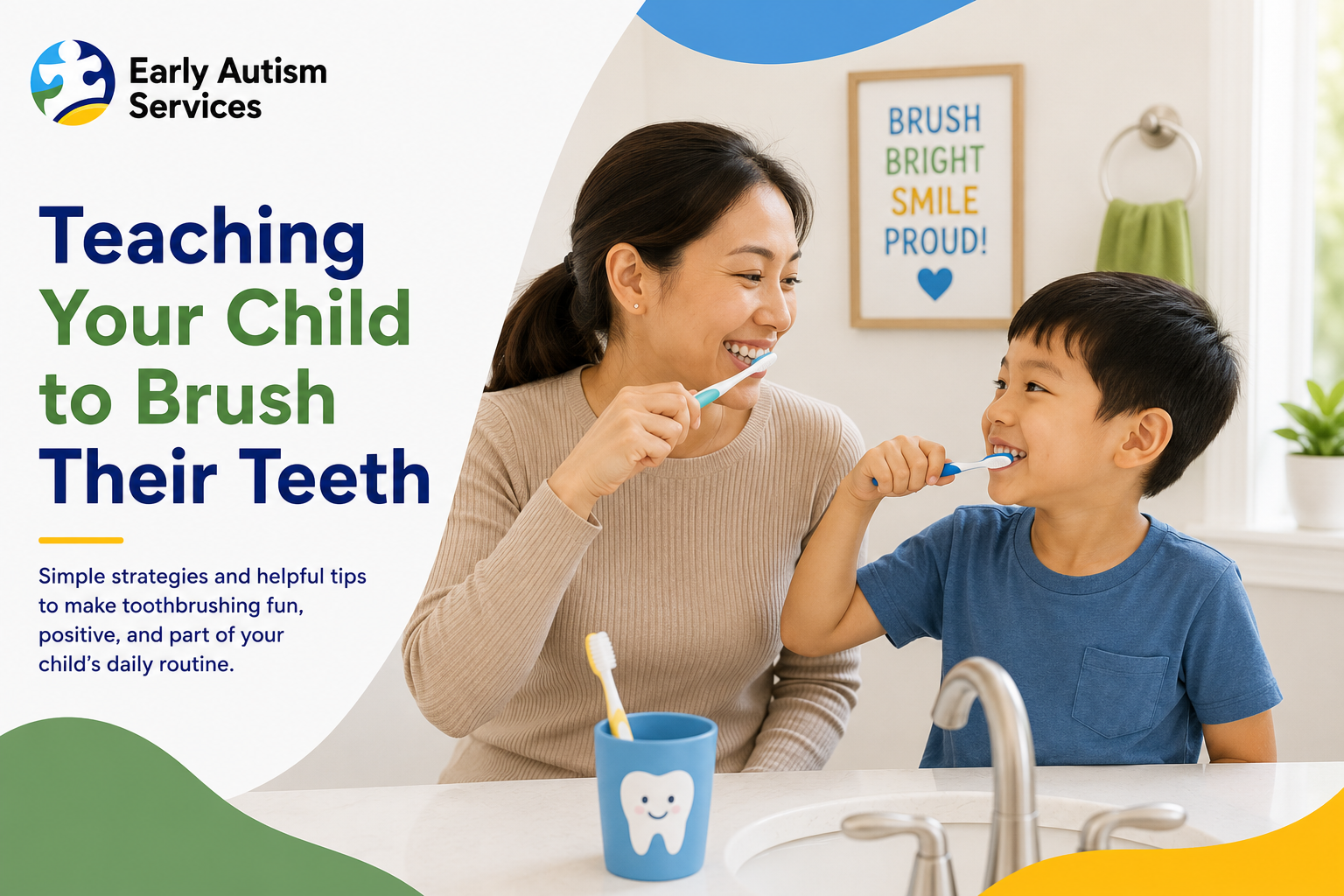
Break it Down Into Small Steps
When beginning to teach your child how to brush their teeth, it is best to start by breaking it down into smaller steps. When breaking these steps down, get creative! Find ways to make it engaging for your child to remember all the steps to teeth-brushing.
Some suggestions include creating visuals in the bathroom to indicate where to brush or an eye-catching step-by-step list. Even making up a song or finding one online can make things fun for kiddos. Children that have difficulty knowing how long to brush can now brush their teeth for the song’s duration. Planning a set time for children to brush their teeth is an easy way to help your child reach their twice-a-day teeth cleaning requirement.
Find a child-friendly toothbrush to increase their interest, it can feature their favorite character. Most toothbrushes and toothpaste have the recommended child’s age on them which can make purchasing one easier.
Reward Your Child’s Progress
As you begin to teach your child how to brush their teeth, remember to use lots of praise and rewards for appropriate behavior. Rewards can be songs, tickles, bubbles, or whatever your child prefers best as they improve. In many cases, children with autism respond especially well to structured praise and reinforcement, which are also important techniques in ABA therapy for autism. With these essential tips, your child should be able to brush their teeth independently in no time!
More Tips You May Find Helpful
Finding a tooth brushing method that works best for you and your child may take some time. Keep trying new techniques and approach each tooth brushing session with an open mind. Some additional tips that may help your child include:
- Use a timer: Seeing how much time your child has left may improve their focus as they brush their teeth.
- Look for different toothpaste flavors: Finding mild flavors such as bubblegum, orange, or even flavorless if your child does not enjoy mint toothpaste.
- Use a power toothbrush: After mastering a manual toothbrush, the next step is to try a power toothbrush that does the brushing for your child.
If you’re looking for more guidance on teaching daily living skills, check out our related post on tips for teaching children with autism.
Contact Early Autism Services Today
At Early Autism Services, we are passionate about helping your child reach their full potential. Through evidence-based approaches like applied behavior analysis (ABA) for autism, our team supports essential self-help skills such as brushing teeth, getting dressed, and building independence. We offer various applied behavior analysis therapy services in many locations across the United States, Australia, and India.
If you have any questions or would like additional information regarding self-help skills, don’t hesitate to reach out and schedule a free consultation. Our team is more than happy to walk you through our programs, answer questions, or talk through costs and insurance.
During your free consultation with us, one of our clinicians will sit down with you and your child to explain our programs. After this consultation, we’ll create a personalized therapy program to help your child develop their skills and learn new ones!
You may also find it useful to read our blog on how ABA therapy supports sensory processing, which ties closely to building independence in daily routines.
Schedule a free consultation today. We look forward to helping your child grow to their full potential.
Explore More
Preparing for an ABA Assessment: What Parents Should Expect
Accessing ABA therapy can feel overwhelming for families, especially when navigating service options, insurance, Medicaid, and the intake process. Early Autism Services works to make ABA therapy more accessible by offering different service settings, supporting families through insurance and intake, and providing individualized care based on each child’s needs.

How Early Autism Services Is Expanding Access to ABA Therapy for Families
Accessing ABA therapy can feel overwhelming for families, especially when navigating service options, insurance, Medicaid, and the intake process. Early Autism Services works to make ABA therapy more accessible by offering different service settings, supporting families through insurance and intake, and providing individualized care based on each child’s needs.

Behavior Is Communication: Understanding What Your Autistic Child May Be Telling You
Behavior can be an important form of communication, especially when a child cannot easily express their needs in words. This parent-friendly guide explores what an autistic child’s behavior may be communicating, how to recognize possible triggers and patterns, and supportive ways to build functional communication skills.


